Katha Upanishad
The Journey Begins. Within.
Long before modern psychology, an ancient dialogue offered a map of the self — one where the body carries us, the mind steers, and something quieter still chooses the direction.
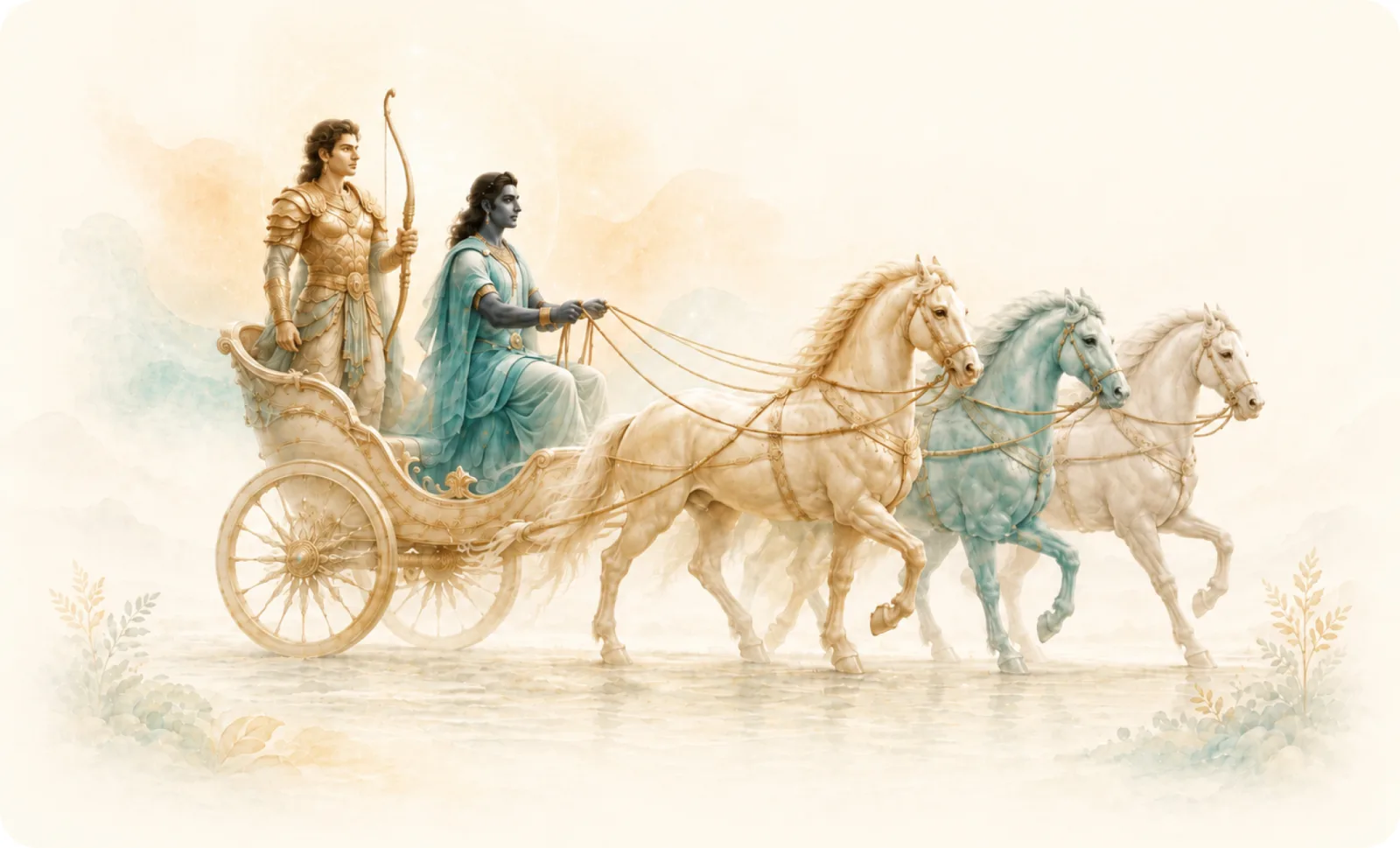
आत्मानं रथिनं विद्धि शरीरं रथमेव तु । बुद्धिं तु सारथिं विद्धि मनः प्रग्रहमेव च ॥
Know the Self as the rider, and the body as the chariot. Know the intellect as the charioteer, and the mind as the reins.
— Katha Upanishad 1.3.3
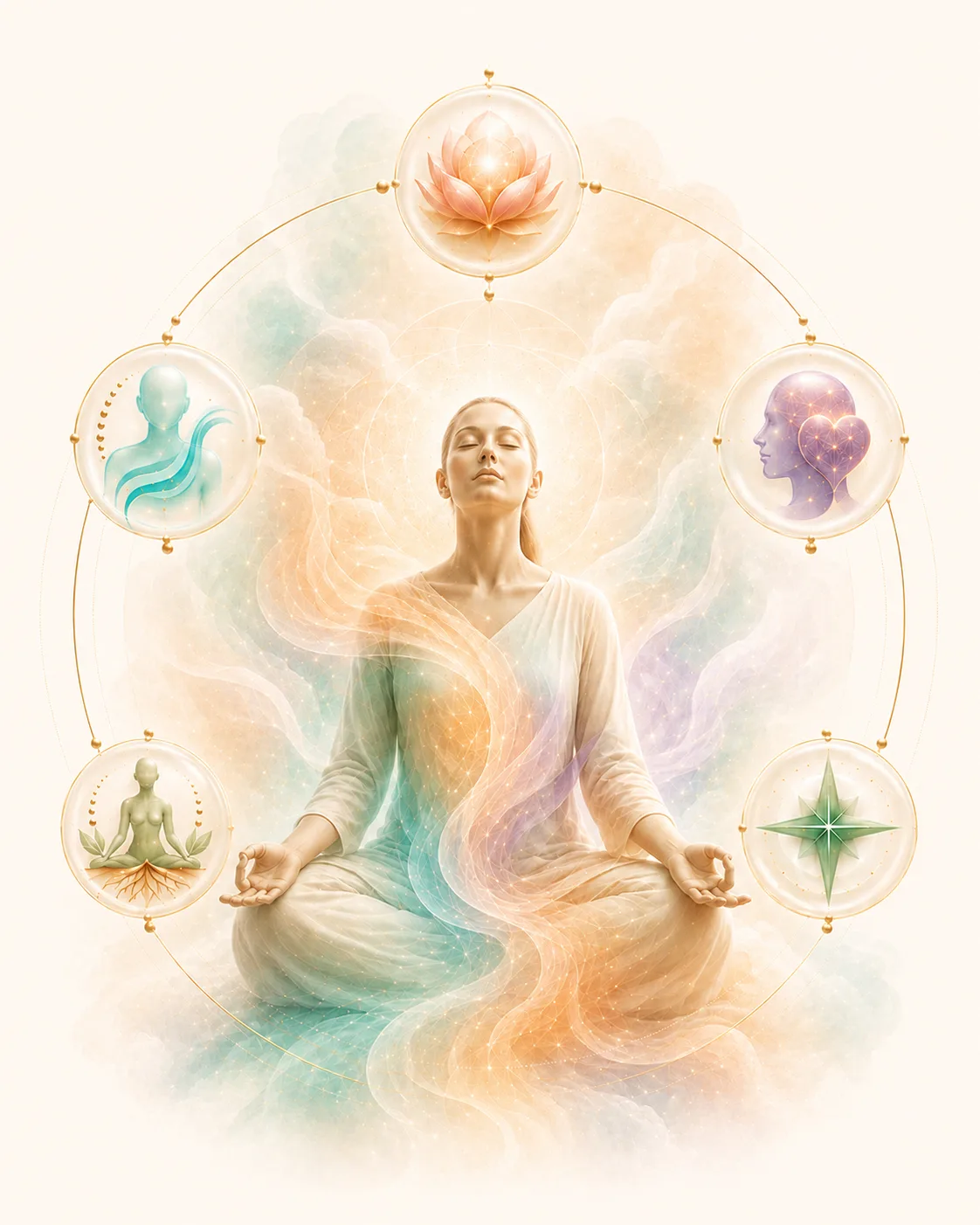
The Upanishadic tradition describes the human experience through five interconnected layers — the Pancha Koshas.
Five Layers. One Human Experience.
Long before modern psychology, an ancient dialogue offered a map of the self — one where the body carries us, the mind steers, and something quieter still chooses the direction.
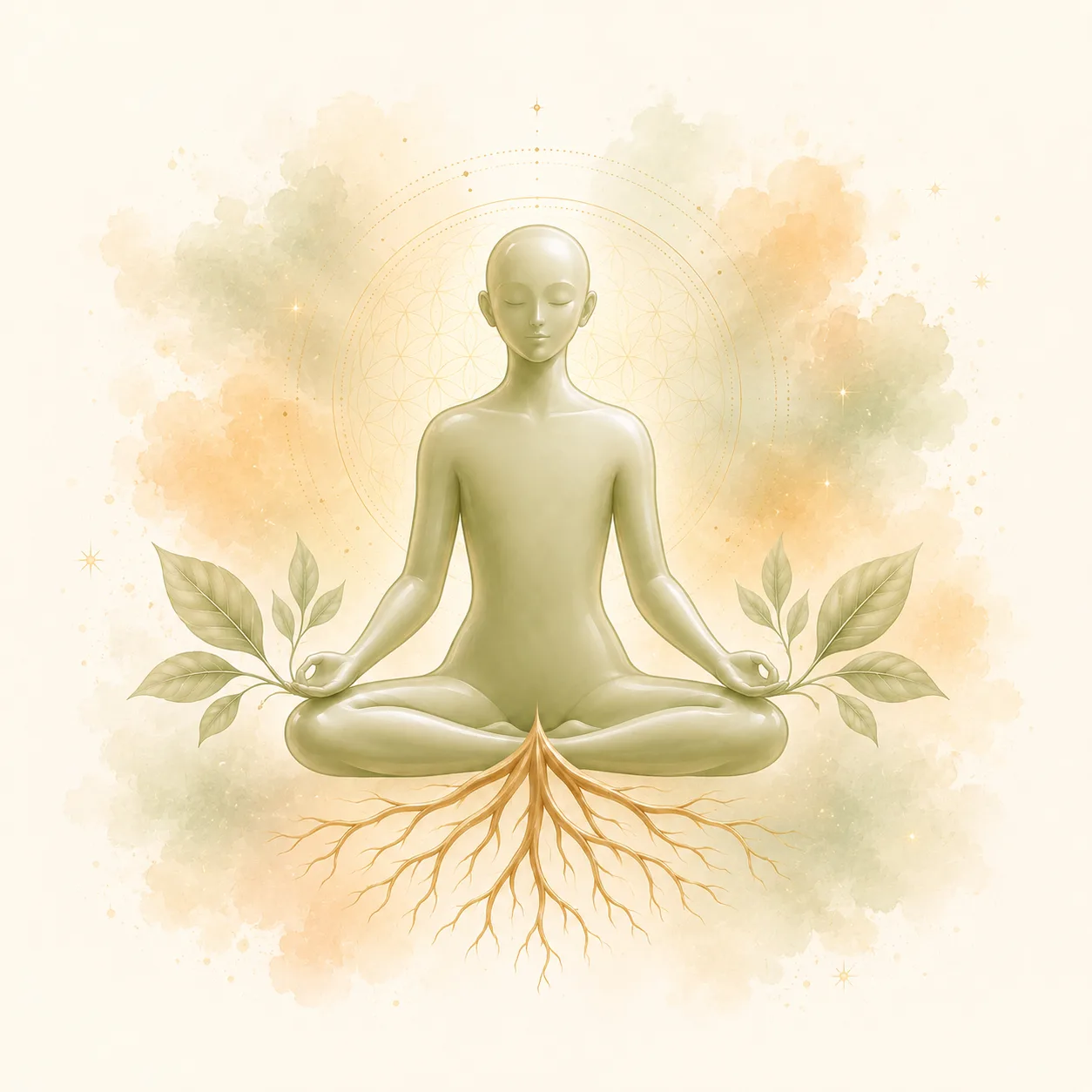
Annamaya Kosha
The Physical Layer
Physical wellbeing, nourishment, movement, rest and grounding — the layer we meet first, made of what we eat and how we move.
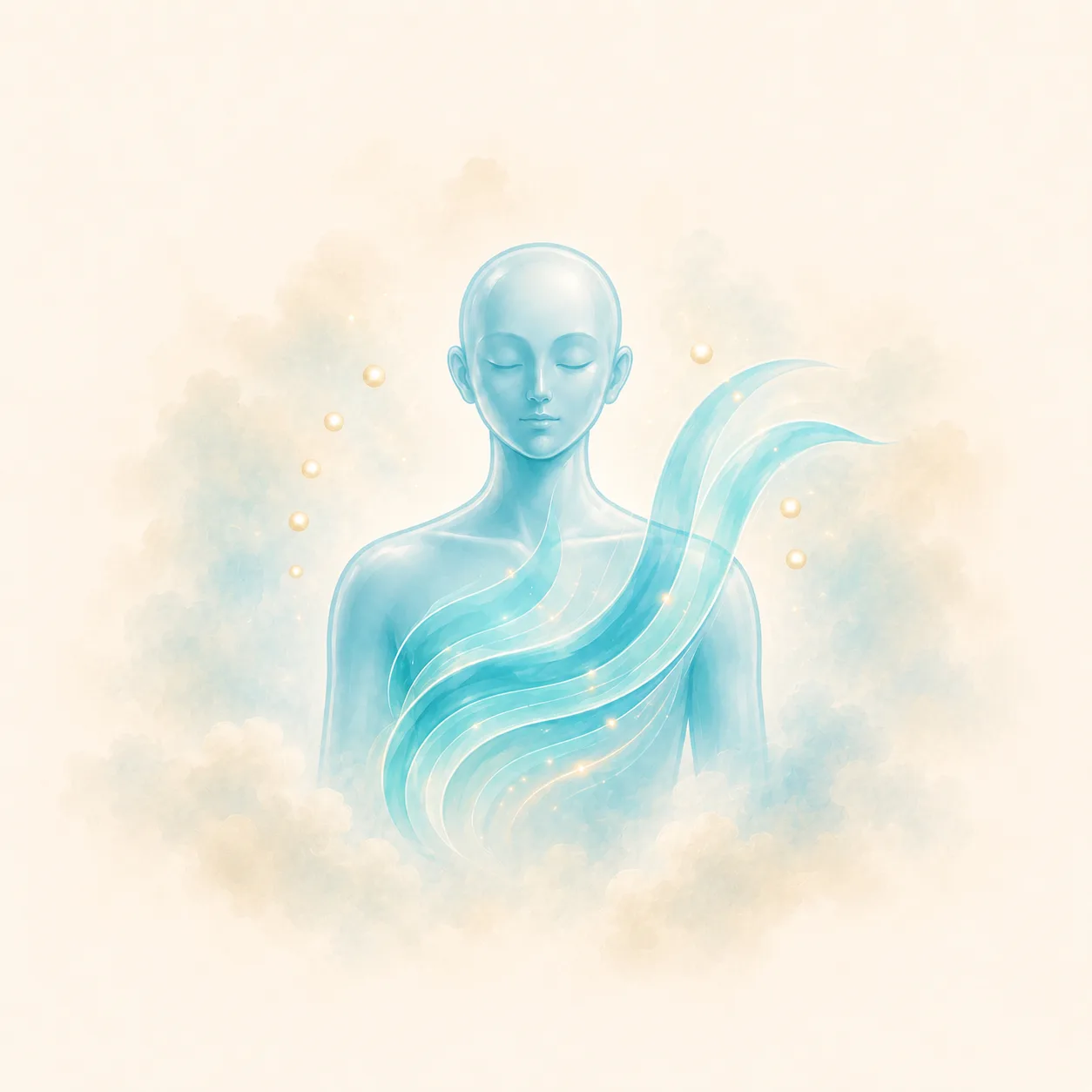
Pranamaya Kosha
The Energy Layer
The subtle current of breath and vitality that animates the body — the bridge between the physical and the mental.
Manomaya Kosha
The Mind & Emotion Layer
Thoughts, feelings and reactions — the restless layer that colors how we perceive everything else.
Vijnanamaya Kosha
The Wisdom Layer
Discernment and deeper intellect — the quiet capacity to observe the mind rather than be ruled by it.

Anandamaya Kosha
The Bliss Layer
A quiet, unconditioned fulfilment beneath thought and emotion — the layer closest to the Self.
Sarvasara Upanishad
The Five Koshas, Described in the Upanishadic Tradition
The passage described in verse 5 of Sarvasaropanishad defines all five koshas of the Panchkosha individually.
अन्नकार्याणां कोशानां समूहोऽन्नमयः कोश इत्युच्यते । प्राणादिचतुर्दशवायुभेदा अन्नमयकोशे यदा वर्तन्ते तदा प्राणमयः कोश इत्युच्यते । एतत्कोशद्वयसंसक्तं मन आदि चतुर्दशकरणैरात्मा शब्दादिविषयसङ्कल्पादीन्थर्मान् यदा करोति तदा मनोमयः कोश इत्युच्यते । एतत्कोशत्रयसंसक्तं तद्गतविशेषज्ञो यदा भासते तदा विज्ञानमयः कोश इत्युच्यते । एतत्कोशचतुष्टयं संसक्तं स्वकारणाज्ञाने वटकणिकायामिव वृक्षो यदा वर्तते तदानन्दमयः कोश इत्युच्यते ॥ ५ ॥
The aggregate of the sheaths constituted by the products of food is called the Annamaya Kośa, the sheath made of food. When the fourteen divisions of the vital airs, beginning with Prāṇa, operate within the Annamaya Kośa, it is called the Prāṇamaya Kośa, the sheath of vital energy. When the Ātman, associated with these two sheaths, functions through the fourteen instruments beginning with the mind, engaging in thoughts and intentions concerning objects such as sound, it is called the Manomaya Kośa, the mental sheath. When, associated with these three sheaths, it shines as the knower of their particularities, it is called the Vijñānamaya Kośa, the sheath of knowledge/intellect. When, associated with these four sheaths, it remains in ignorance of its own cause, like a tree existing in potential form within a banyan seed, it is called the Ānandamaya Kośa, the sheath of bliss.
Panchkosha Methodology
Our Methodological Framework
The passage described in verse 5 of Sarvasaropanishad defines all five koshas of the Panchkosha individually.
01
Evidence-Based Clinical Modalities
Grounded in Cognitive Behavioral Therapy (CBT), Acceptance and Commitment Therapy (ACT), and Positive Psychology.
02
Integrative Wisdom
Structured frameworks from Yoga and Ayurvedic psychology. For emotional agility, focus, and inner balance.
03
Tech-Enabled Personalization
Tailored interventions and scalable digital journeys designed to fit modern daily routines.
अथान्नमयप्राणमयमनोमयविज्ञानमयानन्दमयाः पञ्च कोशाः ।
Annamaya · Pranamaya · Manomaya · Vijnanamaya · Anandamaya
Five Layers. One Human Experience.